Fred begins his work in the field observing his subject ” I do lots of photography” he says, “and also take a video camera to capture the movement of the animals.” Using these references, and models whenever possible, he takes painstaking measurements of the subject (he employs the help of a local taxidermist for the less willing models).
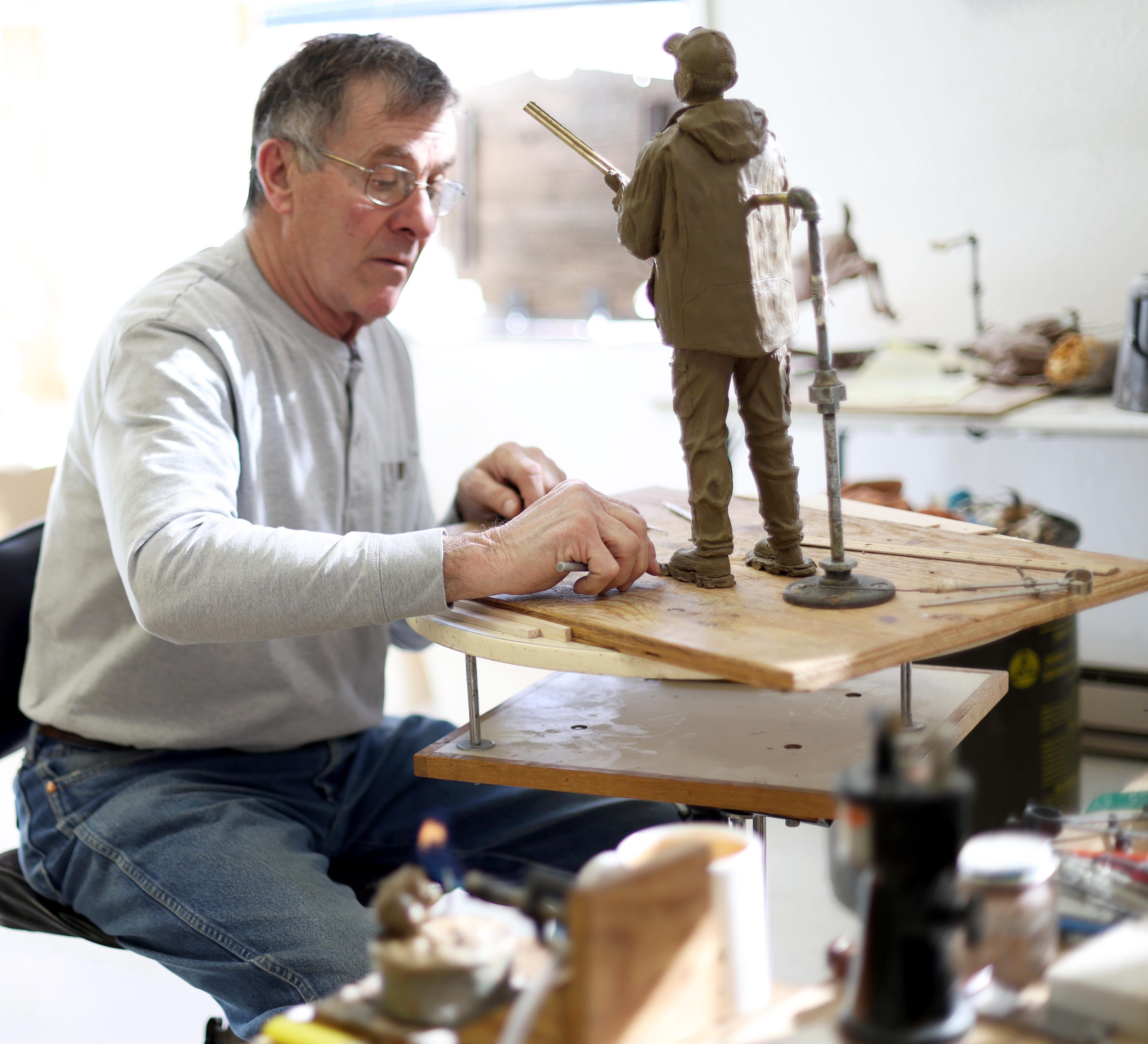
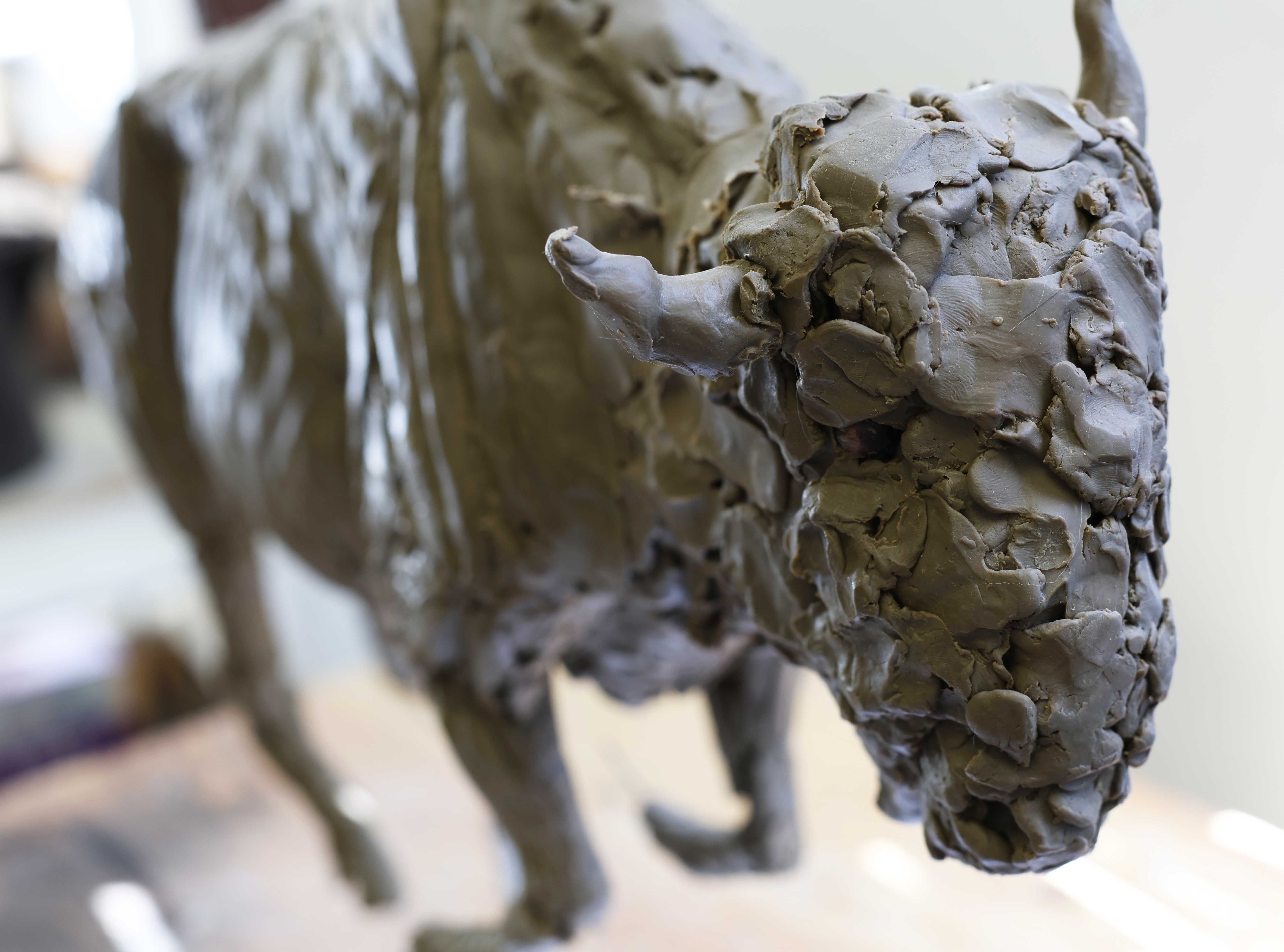
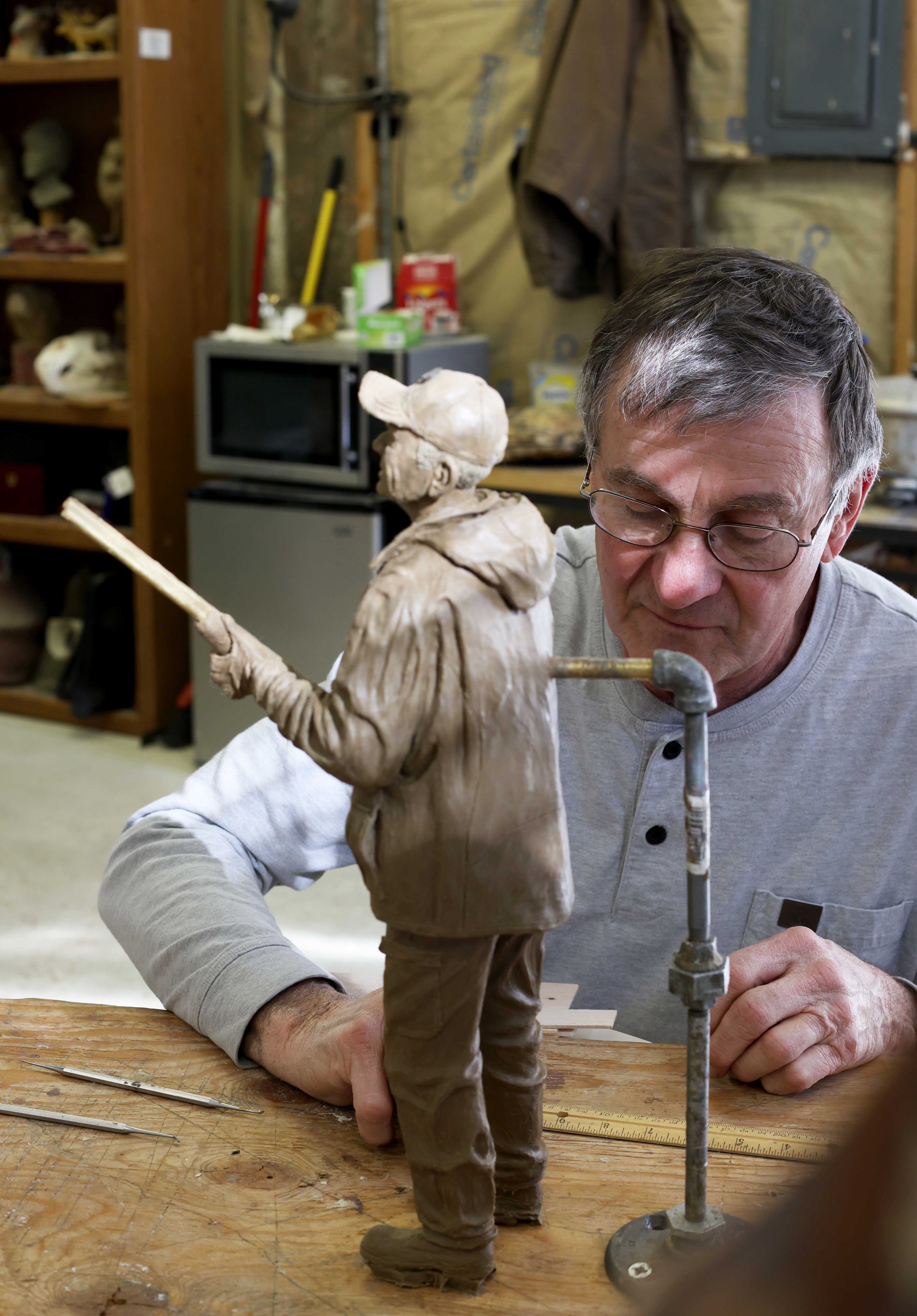
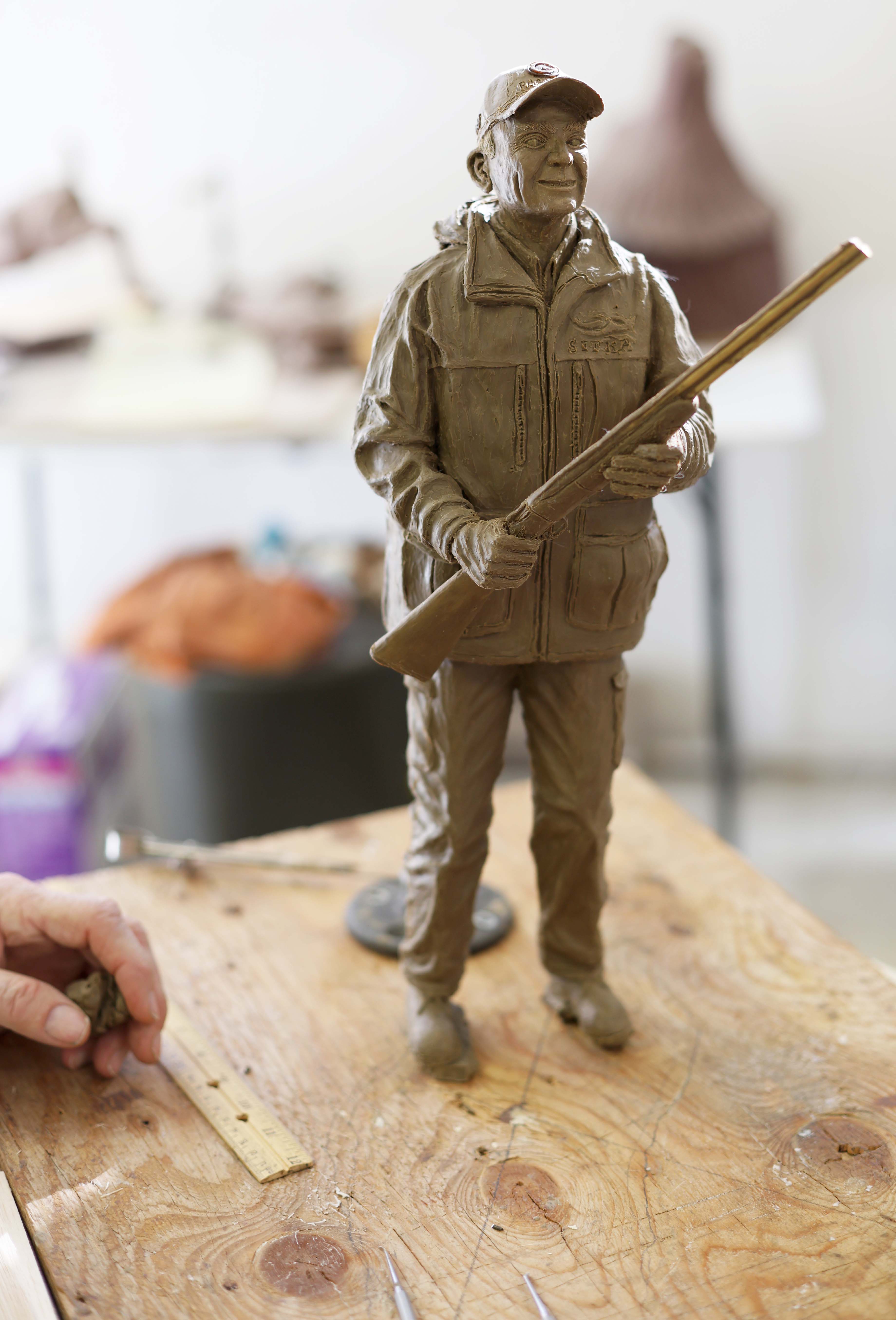
Fred builds the underlying structure, or “armature” of the piece with wire and Styrofoam, which he can then carve to produce the basic shape. This he covers with clay that he’s melted to the consistency of peanut butter. The clay Fred uses is Plastalina, a mixture of Microcrystalyn wax (unrefined paraffin) Kaolin and mineral oil, which he keeps in a heated fridge in a corner of the studio.
This underlying clay remains very pliable so Fred can continue to make adjustments to the model’s position and even lop off a limb should something be dissatisfactory in the process! To translate his measurements onto the piece, Fred employs an architect’s rule, which allows him to scale the work.
Once Fred has a finished “original piece” of clay and wax, for the larger sculptures, the foundry will visit his studio to take careful measurements and photographs before cutting the work into manageable parts. These they transport to the foundry in Oregon.


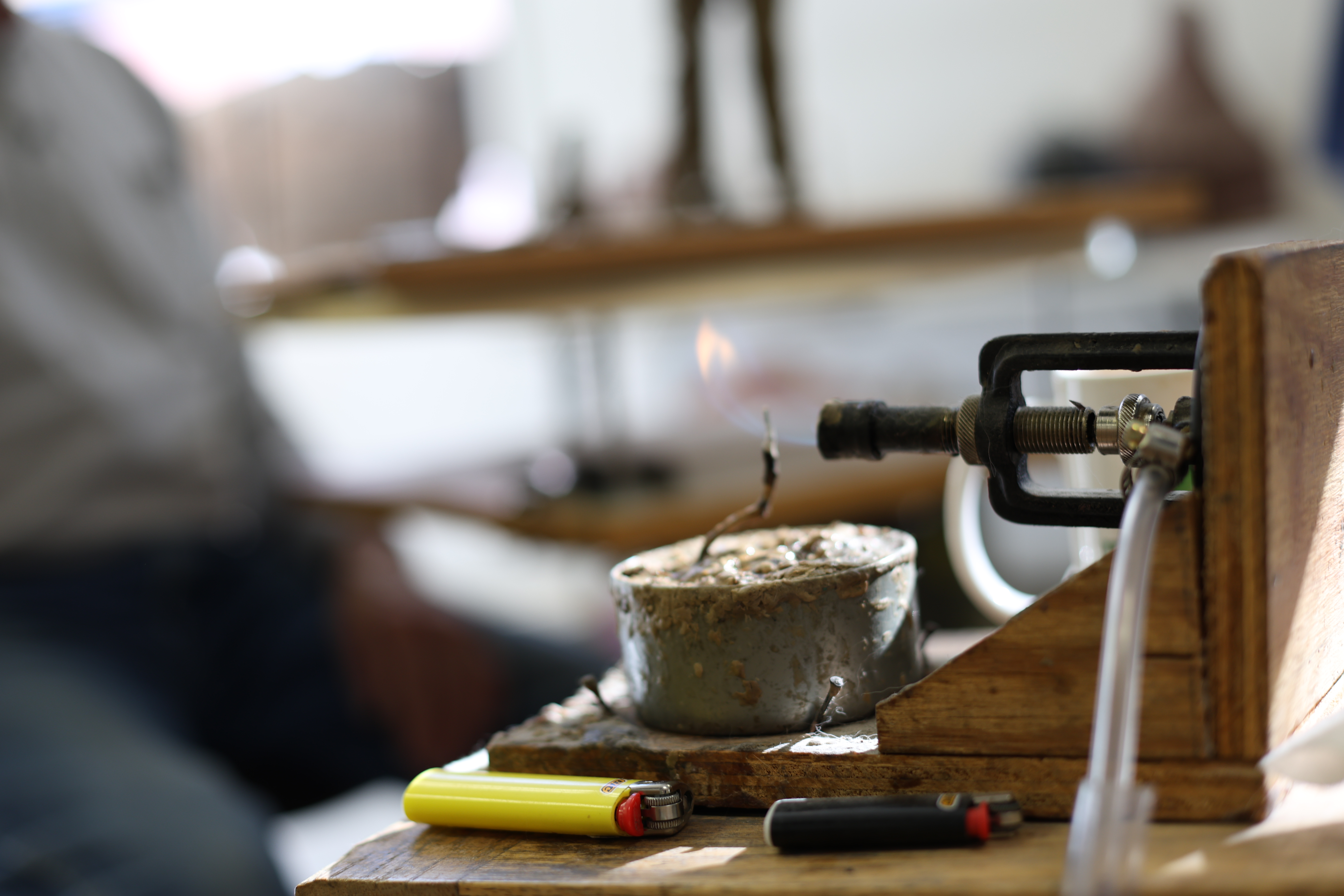

Should the sculpture have many repetitive parts, such as the flight feathers on another work-in-progress, a pair of life-size flying geese, Fred or the foundry will create a latex mold of the part. With these reproduced parts, Fred heats, molds, shapes and changes the character of each individual feather before applying to the wing.
The liner mold is pieced back together and hot wax is poured in. Once this cools and is removed from the mold, it is “chased” or cleaned up to remove any imperfections, usually tiny bubbles on the surface. “Sprues” and “Risers” are tube-like fixtures that are attached to the wax replica to help distribute bronze to every part of the replica. The wax is then dipped in a “slurry” solution to harden into a shell. The slurried wax is sprinkled with very fine beaded silica to add body to the shell, which is then left to harden. This is placed in an oven where the wax melts and escapes through the tubes created by the sprues. Liquid bronze is poured into the shell where it fills the cavity left by the molten wax.
Once the bronze has cooled and hardened, the shell is carefully cracked away from the hardened bonze interior and the sprues are cut off the sculpture with a welding torch. In the case of the large sculptures that have been cast in separate pieces, the foundry welds all the elements back together to assemble the final work. The final touch is to dip the sculpture in patinas, different combinations of chemicals to create the various finishes on the final piece.
Fred is always working on new projects, and continues to develop new pieces.
 Fred Boyer